
You notice it in photos first.
That slightly dull shade. Not yellow exactly. Just not bright.
You brush twice a day. You avoid tobacco. You rinse after tea. Still, the shine you once had feels faded. Then someone casually says, “Why don’t you try whitening?”
And immediately another thought follows:
Does it damage enamel?
At NxtDent Dental Clinic, this is one of the most common questions people ask before choosing teeth whitening in Surat. Everyone wants a brighter smile. No one wants weaker teeth.
So let’s clear the confusion properly.
What Exactly Is Tooth Enamel?
Think of enamel as the outer shield of your tooth.
It is:
- The hardest substance in your body
- Stronger than bone
- Designed to protect against chewing pressure, hot tea, cold drinks, and daily wear
But here’s the catch:
Once enamel is lost, it does not grow back.
That’s why the fear around whitening makes sense. If enamel is permanent, why risk it?
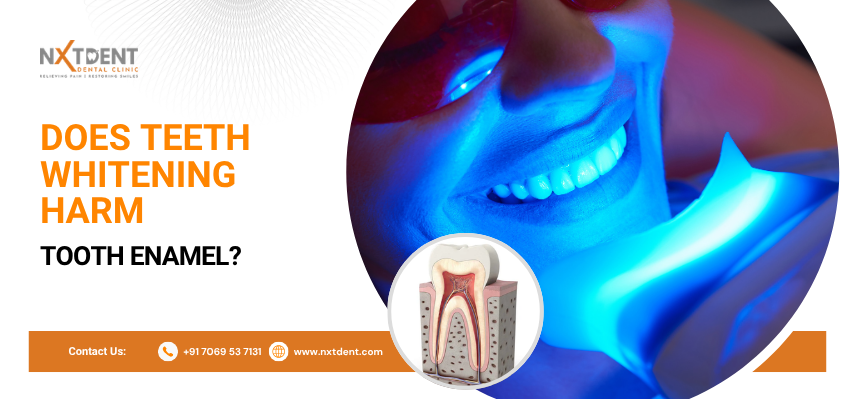
What Happens During Teeth Whitening?
Professional whitening works by using safe concentrations of bleaching agents, usually hydrogen peroxide or carbamide peroxide.
These ingredients:
- Break down stains sitting on the surface
- Penetrate slightly into the enamel to lift deep discoloration
- Do not scrape or file the tooth
Whitening does not peel off enamel.
It does not thin your teeth.
It does not “bleach away” structure.
What it does is oxidize stain molecules so they become lighter.
The real problem starts when whitening is done incorrectly.
When Can Whitening Harm Enamel?
Teeth whitening itself is not the villain. Misuse is.
Enamel problems can happen when:
- Over-the-counter kits are used too frequently
- High-strength products are applied without supervision
- Whitening is done on teeth that already have enamel erosion
- DIY home remedies like lemon, charcoal, or baking soda are overused
Those “natural hacks” you see online?
Acidic substances can actually soften enamel far more than professional whitening ever would.
At NxtDent Dental Clinic, patients coming for teeth whitening in Surat are first checked for:
- Existing enamel wear
- Gum health
- Sensitivity levels
- Cavities or cracks
Whitening is not done blindly.
Why Some People Feel Sensitivity After Whitening
This is where confusion begins.
People often say, “My teeth became sensitive. So enamel must be damaged.”
Not necessarily.
Temporary sensitivity happens because:
- Whitening opens microscopic pores in enamel briefly
- Nerve endings react to temperature changes
- Dehydration of teeth during treatment can increase sensitivity
This usually settles within a few days.
It is not permanent enamel loss.
A simple way to understand it:
|
Concern |
Reality |
|
Whitening removes enamel |
No |
|
Whitening weakens teeth permanently |
No |
|
Sensitivity means damage |
Usually temporary |
|
Supervised whitening is safer |
Yes |
Is Professional Whitening Safe?
Yes, when done correctly.
Professional whitening is:
- Controlled in strength
- Timed properly
- Monitored for sensitivity
- Customized to your oral condition
That is very different from:
- Random online strips
- Cheap unregulated products
- Frequent self-application
At NxtDent Dental Clinic, whitening procedures are designed based on your enamel condition, not a standard formula.
That makes a difference.
What Actually Damages Enamel More Than Whitening?
If enamel had a list of enemies, whitening would not be at the top of it.
More harmful habits include:
- Regular consumption of acidic drinks
- Sipping soft drinks slowly over hours
- Brushing aggressively with hard bristles
- Grinding teeth at night
- Using abrasive tooth powders
- Skipping routine dental cleanings
Many people in Surat love tea. Some enjoy soda. Some chew ice. Over time, these habits affect enamel more than a controlled whitening session ever would.
Who Should Avoid Whitening?
Whitening is not for everyone.
It may not be ideal if you have:
- Severe enamel erosion
- Active gum disease
- Untreated cavities
- Very high sensitivity
- Pregnant or breastfeeding condition (consult first)
That’s why a dental check-up matters before starting teeth whitening in Surat.
It is not about selling a cosmetic procedure. It is about protecting your teeth first.
How Dentists Protect Enamel During Whitening
Professional care includes several protective steps:
- Measuring peroxide strength carefully
- Applying gum barriers
- Monitoring exposure time
- Using desensitizing agents
- Suggesting post-treatment care
After whitening, you may be advised to:
- Avoid tea and coffee for 24 to 48 hours
- Use a sensitive toothpaste
- Drink through a straw for dark beverages
- Maintain gentle brushing
These small steps protect your enamel and maintain results.
Does Whitening Make Teeth More Fragile Long-Term?
Scientific research shows that supervised whitening does not permanently weaken enamel.
Temporary surface changes may occur, but enamel naturally remineralizes through saliva.
Your saliva is powerful. It restores minerals like calcium and phosphate back into enamel daily.
Think of whitening as polishing a marble floor.
If done properly, the structure remains intact.
How Often Can You Safely Whiten?
This depends on your lifestyle.
General guidance:
- Professional whitening once a year is common
- Touch-ups may be done if needed
- Frequent back-to-back sessions are not recommended
People who drink tea daily, smoke, or consume colored foods often may need maintenance earlier.
At NxtDent Dental Clinic, patients asking for teeth whitening in Surat are advised honestly about frequency rather than encouraged to undergo repeated unnecessary treatments.
Whitening vs. Scaling: Know the Difference
Some people confuse whitening with cleaning.
|
Feature |
Scaling (Teeth Cleaning) |
Teeth Whitening |
|
Main Purpose |
Removes plaque and tartar buildup |
Lightens the natural shade of teeth |
|
Focus Area |
Surface deposits and gum line |
Internal and deep stains |
|
Effect on Gum Health |
Improves gum health |
Does not treat gum issues |
|
Shade Change |
May look slightly brighter after cleaning |
Actively changes tooth color |
|
Type of Procedure |
Preventive oral care treatment |
Cosmetic dental procedure |
Both are safe when performed professionally.
Often, cleaning is recommended before whitening for better results.
Common Myths Around Whitening
Let’s clear a few more misunderstandings.
Myth: Whitening makes teeth chalky.
Reality: Proper hydration restores natural shine.
Myth: One session damages enamel forever.
Reality: Controlled whitening does not strip enamel.
Myth: If it burns, it’s working.
Reality: Discomfort is not a sign of effectiveness.
Myth: Home remedies are safer.
Reality: Acidic DIY treatments can erode enamel faster.
How to Keep Your Smile Bright Without Damaging Enamel
Whitening works best when supported by good habits.
Simple daily care:
- Use a soft toothbrush
- Brush gently, not aggressively
- Rinse after tea or coffee
- Visit your dentist regularly
- Avoid chewing hard objects
- Use fluoride toothpaste
These habits matter more than any whitening procedure.
So, Does Teeth Whitening Harm Enamel?
When done carelessly, yes, it can cause problems.
When done professionally and responsibly, no, it does not destroy enamel.
The key is assessment, proper technique, and moderation.
At NxtDent Dental Clinic, patients considering teeth whitening in Surat are guided based on their individual dental health. The aim is not just a brighter smile for a few weeks, but a healthy smile for years.
A white smile looks good.
A healthy smile feels better.
If you are thinking about whitening, start with a consultation. Your enamel deserves attention before transformation.